“Can I go snorkeling if I can’t swim?”
This is one of the questions we hear most often from first-time guests at Okinawa Aquamarine.
The answer is yes: people who can’t swim can still enjoy snorkeling.
Snorkeling doesn’t require you to keep swimming under your own power as you would in a swimming race.
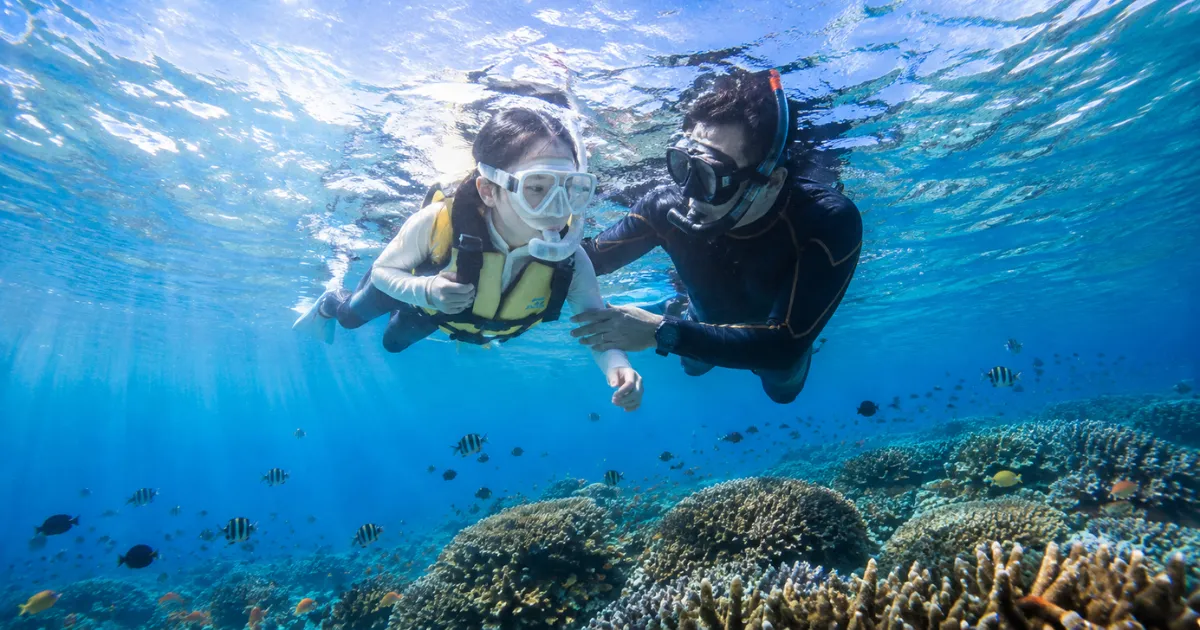
You float at the surface with support from buoyant equipment such as a wetsuit or life jacket, then use a mask and snorkel to look underwater.
Even if you aren’t a confident swimmer or have very little experience in the ocean, you may be able to enjoy snorkeling after practicing the basics before setting off.
Why You Can Enjoy Snorkeling Without Being Able to Swim
Snorkeling mainly involves floating at the surface and watching the marine life below.
At Okinawa Aquamarine, we use buoyant equipment such as wetsuits, which help your body float more easily than it would without any equipment.
If you’re nervous about swimming, our staff stay nearby to support you as you move through the water.
The key is to relax and float at the surface, rather than try to swim fast.
You may feel tense at first, but as you get used to floating, you’ll often find it easier to take in the fish and coral around you.
What Do You Actually Do When Snorkeling?
If it’s your first time, not knowing what happens once you enter the ocean can feel a little daunting.
The basic steps are straightforward:
- Put on your mask, snorkel, and other equipment
- Learn how to breathe through the snorkel and use the equipment
- Get comfortable floating at the surface
- Move slowly through the water with the staff
- Watch coral, tropical fish, and other marine life
We won’t ask you to start swimming around on your own in deep water.
First, we go over the equipment and breathing technique so you can feel more comfortable before exploring.
Try Not to Tense Up
If you aren’t confident in the water, you may tense your body when you enter the ocean.
Worrying about sinking can also make you move your arms and legs more than necessary.
When you’re wearing buoyant equipment, relaxing your body can help you float more comfortably than keeping your muscles tense.
Start near the staff, settle into steady breathing, and get used to the feeling of floating.
You don’t need to be a skilled swimmer.
What If You’re Afraid to Put Your Face in the Water?
For some people, putting their face in the water feels more intimidating than swimming itself.
You don’t need to force yourself to look underwater right away.
Take time to settle your breathing at the surface, then try putting your face in the water a little at a time as you feel ready.
A snorkeling mask covers your nose, so you breathe through your mouth using the snorkel. This can feel unfamiliar at first.
Practicing with the snorkel before entering the ocean can help you feel calmer once you’re in the water.
What If the Water Is Too Deep to Stand In?
Snorkeling sometimes takes place in water where your feet can’t reach the bottom.
That may sound unsettling, but snorkeling generally involves floating at the surface, regardless of the depth below you.
Whether the seabed is 2 meters or 10 meters below, you’re still floating at the surface.
However, if being unable to stand makes you very anxious, it’s important to tell the staff beforehand.
At Okinawa Aquamarine, we check how you’re feeling and guide you at a manageable pace.
Stay Close to the Staff If You Aren’t a Confident Swimmer
Let the staff know from the start if you’re concerned about your swimming ability.
There’s no need to feel embarrassed about saying you can’t swim.
Knowing beforehand helps the staff provide support that suits your needs.
Once you’re in the water, stay close to the staff and take your time rather than pushing yourself to keep up with the group.
Can Children Join If They Can’t Swim?
Children may also be able to enjoy snorkeling, depending on their age, size, and comfort in the ocean.
How they feel that day and how they respond to the water can vary considerably.
Some children can swim in a pool but feel nervous in the ocean. Others can’t swim yet but enjoy looking underwater.
Watch how your child responds, and don’t force them into the water.
If you’re joining as a family, let us know your child’s age and swimming experience when booking.
How to Prepare If You Can’t Swim
A little preparation before your trip can help you feel more comfortable on your first snorkeling tour.
- Practice breathing through your mouth, even while taking a bath
- If possible, get familiar with the feeling of floating in a pool
- Take care of yourself and get enough sleep
- Avoid alcohol before your tour
- Discuss any concerns with the tour operator in advance
You don’t need a special training program.
Simply getting more familiar with the water and arriving well rested can help reduce some of your worries.
There’s No Need to Push Yourself
People who can’t swim can enjoy snorkeling, but that doesn’t mean everyone will be able to enter the ocean on every tour.
Depending on your health, the sea conditions, and how anxious you feel, we may adjust how you take part or ask you to stay out of the water for safety.
Don’t feel that you have to push yourself just because you’ve traveled to Okinawa.
What matters most is experiencing Okinawa’s ocean in a way that is safe and manageable for you.
You Can Enjoy Snorkeling Even If You Can’t Swim
With buoyant equipment and support from the staff, people who can’t swim can still enjoy snorkeling.
The key is to relax, float at the surface, and gradually get comfortable in the ocean.
At Okinawa Aquamarine, we guide first-time snorkelers and guests who aren’t confident swimmers through the basics, including how to use the equipment and breathe through a snorkel.
“I can’t swim at all, but I’d like to try.”
“I’m worried because my child can’t swim.”
“I’m afraid of water that’s too deep to stand in.”
If you have concerns like these, please feel free to contact us before booking.